
AI agents are replacing traditional search — they don't browse, they act. With 810 million daily ChatGPT users and AI referral traffic up 527%, your website needs to serve both humans and machines. Here's your practical guide to AI-era visibility.
Google has dominated search for over two decades. That dominance is now fracturing — not because of a better search engine, but because search itself is being replaced by something fundamentally different.
AI agents don’t search. They act. They read your website, evaluate your offer, compare it against competitors, and make recommendations — all without a human ever typing a query into a search bar. This shift isn’t theoretical. It’s measurable, accelerating, and already reshaping how businesses get discovered online.
If your website was built to rank on Google, you’ve optimized for a game that’s changing beneath your feet. The question isn’t whether AI agents will affect your business. The question is whether you’ll be visible when they start making decisions on behalf of your customers.
The End of Classic Search: Why Google Is Losing Control
The Numbers Speak for Themselves
Google still processes billions of queries daily, but the trajectory is unmistakable. Gartner projects that traditional search engine volume will drop 25% by the end of 2026. That’s not a rounding error — it’s a structural decline.

ChatGPT now serves 810 million daily users. Google’s own AI Overviews reach 1.5 billion users monthly, effectively cannibalizing its traditional results. Zero-click searches — queries where users never visit any website — have climbed to 69%, up from 56% in May 2024. Organic click-through rates have dropped 61% on queries where AI Overviews appear.
Think about what that means for your business. Even if you rank on page one, the majority of searchers may never reach your site. Google itself is answering the question, pulling content from your pages and presenting it directly.
Meanwhile, AI-driven referral traffic grew 527% in the first half of 2025. That traffic isn’t coming from Google’s blue links. It’s coming from ChatGPT, Perplexity, Claude, Microsoft Copilot, and a growing ecosystem of AI tools that are becoming the default way people find information.
From Searching to Agentic Action
The deeper shift goes beyond traffic numbers. Classic search was reactive: a user typed a query, scanned ten blue links, clicked a few, and made their own decision. The user did the work.
AI agents flip this model. A user states a goal — “find me a PPC agency in Europe that specializes in e-commerce” — and the agent does everything else. It crawls websites, reads pricing pages, evaluates case studies, checks reviews, and returns a shortlist. The user never sees a search results page. They see an answer.
This isn’t a marginal use case. AI agents now account for approximately 33% of organic search activity. One in three “searches” isn’t a search at all — it’s an AI system autonomously gathering and synthesizing information.
Google recognizes this threat. The company has poured resources into AI Overviews, Gemini integration, and its own agentic capabilities. But by doing so, it’s accelerating the very behavior that undermines its ad-driven business model. Every AI-generated answer that satisfies a user without a click is a click that doesn’t generate ad revenue.
What Are AI Agents and Why They Change Everything
How AI Agents Work
An AI agent is software that can autonomously plan, execute, and iterate on tasks to achieve a goal. Unlike a chatbot that responds to a single prompt, an agent breaks down complex objectives into steps, uses tools (web browsing, APIs, databases), and adjusts its approach based on what it finds.
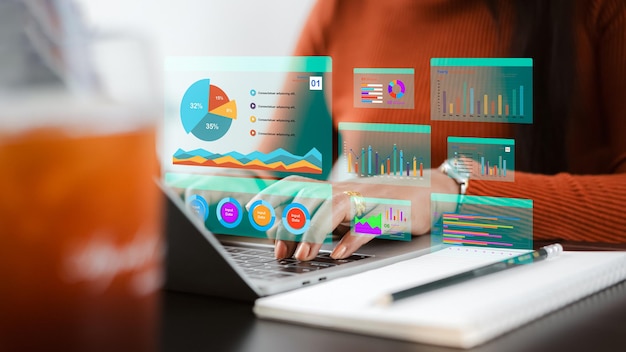
When an AI agent needs information about a product or service, it doesn’t just match keywords. It reads entire pages, extracts structured data, evaluates credibility signals, cross-references multiple sources, and synthesizes a response. The process resembles what a thorough human researcher would do — compressed into seconds.
These agents rely on large language models (LLMs) as their reasoning engine, but they extend far beyond simple text generation. Modern agents can:
- Navigate websites and extract specific data points
- Compare offerings across multiple providers
- Verify claims against independent sources
- Execute transactions and fill out forms
- Monitor changes over time and alert users
Who Already Uses AI Agents Today
The adoption curve is steeper than most businesses realize. OpenAI’s operator agent can browse the web and complete tasks on behalf of users. Google’s Gemini agents are integrated into Workspace, handling research and scheduling. Microsoft’s Copilot agents operate across the entire Office ecosystem and CRM platforms.
In B2B procurement, AI agents are already screening vendors, comparing proposals, and generating shortlists. Enterprise buyers at companies like Klarna, Shopify, and SAP use AI-powered procurement tools that autonomously evaluate suppliers before a human ever gets involved.
Consumer-facing agents are equally active. Perplexity’s shopping agent compares products and prices in real time. ChatGPT with browsing capability researches travel options, compares service providers, and recommends professionals. These aren’t niche tools — they represent mainstream behavior shifts happening right now.
For European businesses specifically, the proliferation of multilingual AI agents creates both opportunity and risk. An agent researching “marketing agencies in Prague” can evaluate Czech, English, and German content simultaneously, making multilingual optimization more valuable than ever.
Agentic Search vs. Traditional Search
| Dimension | Traditional Search | Agentic Search |
|---|---|---|
| User effort | High — browse, compare, decide | Low — state goal, receive answer |
| Results format | 10 blue links | Synthesized recommendation (2-7 sources cited) |
| Ranking factor | SEO signals (backlinks, keywords, authority) | Content clarity, structured data, factual accuracy |
| Click behavior | Multiple clicks to compare | Zero or one click to the recommended option |
| Conversion path | Funnel: awareness → consideration → decision | Compressed: agent recommends → user acts |
| Data access | Indexed HTML pages | HTML + APIs + structured data + llms.txt |
One critical difference stands out: LLMs typically cite only 2-7 domains per answer. In traditional search, ranking in the top 10 gave you visibility. In agentic search, only a handful of sources get mentioned. The competition for those citation slots is fierce and follows different rules than SEO.
What This Means for Your Website and Business
Your Website as a “Database” for AI
Your website is no longer primarily a destination for human visitors. Increasingly, it’s a data source that AI agents query, parse, and evaluate. This reframes everything about how you should think about web content.
When an AI agent visits your site, it doesn’t care about your hero animation, your clever headline, or your brand video. It cares about structured, unambiguous, factual information it can extract and use. Pricing details. Service specifications. Geographic coverage. Client results with verifiable numbers. Case studies with measurable outcomes.
The websites that perform best in AI agent evaluations share common traits: clear information architecture, machine-readable structured data, explicit and specific claims, and content that directly answers the questions an agent would ask on behalf of a user.
Winners and Losers
This transition creates stark winners and losers. Businesses that adapt will capture disproportionate visibility because AI agents concentrate attention on fewer sources. Getting cited in an AI response delivers traffic that converts at over 10% — the highest converting channel measured.
Businesses that ignore this shift face a compounding disadvantage. As AI agents handle more of the research and decision-making process, websites optimized only for traditional SEO will see declining traffic and fewer qualified leads. The 527% growth in AI referral traffic isn’t distributed evenly — it flows to sites that AI systems can effectively read, trust, and cite.
Consider this: 92.36% of AI Overview citations come from domains that already rank in the top 10. Authority still matters, but the form of authority is shifting. AI agents weight factual accuracy, content depth, and structured data alongside traditional signals like backlinks and domain authority.
Pro tip: Check your server logs for AI crawler traffic today. Look for user agents like GPTBot, ClaudeBot, PerplexityBot, and Bytespider. You may be surprised how much AI traffic you’re already receiving — and how little of it converts because your site isn’t optimized for machine readability.
Real-World Scenario: How an AI Agent Picks a Supplier
A marketing director at a mid-sized e-commerce company in Germany asks their AI assistant: “Find me a PPC management agency in Central Europe with proven e-commerce results, transparent pricing, and at least 3 years of experience.”
Here’s what the agent does in the next 15 seconds:
- Identifies relevant agencies by crawling directories, review platforms, and direct web searches across multiple languages
- Visits each agency’s website and extracts service descriptions, pricing models, case studies, team credentials, and client testimonials
- Cross-references claims with third-party sources — Google reviews, Clutch profiles, LinkedIn company data
- Filters based on the stated criteria: Central European location, e-commerce specialization, transparent pricing, 3+ years in business
- Ranks remaining candidates based on evidence quality: specific ROI numbers beat vague claims, named clients beat anonymous ones, detailed methodology beats generic service descriptions
- Returns a shortlist of 3-5 agencies with a brief rationale for each recommendation
If your website has vague service descriptions, no pricing information, and case studies that say “we increased conversions significantly” without numbers — you won’t make that shortlist. The agency that clearly states “we achieved a 340% ROAS for [client name] in the automotive e-commerce vertical over 6 months” wins the citation.
How to Prepare Your Website for the AI Agent Era — Practical Checklist
Technical Foundations
Before optimizing content, your technical infrastructure needs to support AI agent access. Start with a technical website audit to identify gaps.
Page speed and accessibility: AI agents can access slow sites, but they time out faster than human visitors. A clean, fast-loading site with semantic HTML gives agents better data extraction. Use proper heading hierarchy (H1 → H2 → H3), semantic tags (<article>, <section>, <nav>), and avoid content rendered exclusively via JavaScript that crawlers can’t execute.
Schema.org structured data: This is non-negotiable. Implement comprehensive JSON-LD markup for your business type. At minimum, you need:
Organization— name, address, contact info, social profilesLocalBusinessor appropriate subtype — location, hours, service areaService— detailed service descriptions with pricing where applicableFAQPage— structured Q&A that agents can directly parseReviewandAggregateRating— client ratings and testimonialsArticle— for blog content with author, date, and topic markup
Clean URL structure and internal linking: AI agents navigate your site through links, just like search engine crawlers. A logical URL hierarchy and robust internal linking ensure agents can discover all relevant content. Orphan pages — those with no internal links pointing to them — are effectively invisible to AI agents.
llms.txt and robots.txt for AI Crawlers
A new standard is emerging: llms.txt. This file, placed at your domain root, provides LLMs with a structured summary of your site’s content, purpose, and key information. Think of it as a README file for AI systems visiting your website.
A basic llms.txt file includes:
- Company name and description
- Primary services and products
- Key pages and their purposes
- Contact information and service areas
- Links to documentation, APIs, or data feeds
For robots.txt, you need to make deliberate decisions about AI crawler access. Some businesses reflexively block AI bots, but this is usually counterproductive. Blocking GPTBot means ChatGPT can’t recommend you. Blocking ClaudeBot means Claude can’t cite your content. Unless you have specific reasons to restrict AI access (e.g., paywalled content, proprietary data), allow these crawlers.
Review and update your robots.txt to explicitly permit:
- GPTBot (OpenAI / ChatGPT)
- ClaudeBot (Anthropic / Claude)
- PerplexityBot (Perplexity AI)
- Google-Extended (Gemini / AI Overviews)
- Bytespider (ByteDance / AI training)
Warning: ChatGPT cites Wikipedia in 47.9% of factual queries. If your only online presence is your website, you’re missing citation opportunities. Make sure your business has accurate, well-sourced entries on Wikipedia (where notable), industry directories, review platforms, and knowledge bases that AI systems frequently reference.
Content That AI Agents Cite
AI agents have a strong preference for content that is specific, verifiable, and structured. Generic marketing copy — the kind that says “we deliver best-in-class solutions” — gets ignored. Content that earns citations follows a different pattern.
Be specific with numbers: Instead of “we help businesses grow,” write “our clients see an average 3.2x return on ad spend within 90 days of campaign launch.” AI agents can extract and compare specific claims. Vague statements are useless to them.
Answer questions directly: Structure your content around the questions your potential customers ask. Use clear question-and-answer formats, FAQ sections, and topic-specific pages that address single queries comprehensively. AI agents are trained to match user intent with direct answers.
Cite your own sources: When you make claims, back them up. Link to case studies, reference industry reports, include dates and data points. AI agents assess credibility partly by checking whether claims are supported by evidence.
Update content regularly: AI systems weight recency. A comprehensive guide last updated in 2023 will lose citation priority to a less comprehensive but current 2026 article. Add “last updated” dates to your content and refresh key pages quarterly.
Create comparison and benchmark content: AI agents frequently need to compare options. If you publish honest, data-backed comparisons — including acknowledging where competitors might be stronger — you become a trusted reference source. This is counterintuitive for many businesses, but it works.
API and Machine Readability
Forward-thinking businesses are going beyond web content and providing direct API access to their data. Product catalogs, pricing, availability, and service specifications can all be exposed via APIs that AI agents can query directly.
You don’t need to build a full REST API immediately. Start with:
- Structured data feeds: XML sitemaps with rich metadata, product feeds in standard formats
- Consistent data formats: Ensure the same information isn’t presented differently across pages
- Machine-readable pricing: Even if you use “contact for quote” for custom services, provide pricing ranges or starting points that agents can extract
- Downloadable specifications: PDF datasheets, CSV pricing tables, or JSON product catalogs
Use your analytics tools to track which AI agents visit your site, what pages they access, and how often. This data tells you exactly what AI systems find valuable about your content — and what they skip.
From SEO to GEO and AEO: A Complete Strategy for 2026
Why SEO Still Matters
Traditional SEO optimization isn’t dead. It’s the foundation on which AI visibility is built. The data proves this: 92.36% of AI Overview citations come from pages that already rank in Google’s top 10. You can’t skip SEO and jump straight to AI optimization.
Strong SEO means your site has established domain authority, quality backlinks, well-structured content, and technical health. These signals still influence which sources AI systems trust. An AI agent deciding between two equally relevant sources will typically favor the one with stronger traditional authority signals.
What’s changing is that SEO alone is no longer sufficient. Ranking on page one doesn’t guarantee AI citation, and not ranking on page one doesn’t guarantee exclusion. The relationship between SEO rankings and AI visibility is strong but not absolute.
GEO + AEO as the Next Layer
Generative Engine Optimization (GEO) and Answer Engine Optimization (AEO) represent the additional strategies needed for AI visibility. If you haven’t already, read our complete guide to GEO and AEO optimization for a detailed breakdown.
GEO focuses on:
- Optimizing content for inclusion in AI-generated responses
- Structuring information so LLMs can accurately extract and cite it
- Building topical authority that AI systems recognize
- Creating content formats that generative engines prefer (structured, factual, comprehensive)
AEO focuses on:
- Directly answering questions users ask AI assistants
- Providing concise, quotable statements that agents can use verbatim
- Optimizing for voice and conversational queries
- Structuring FAQ and knowledge-base content for zero-click extraction
Together, SEO + GEO + AEO form a three-layer strategy. SEO builds the authority foundation. GEO ensures your content is formatted for AI consumption. AEO targets the specific question-and-answer interactions where AI agents make recommendations.
Citation Share — The New Success Metric
Traditional SEO tracked rankings, organic traffic, and click-through rates. AI optimization requires a new metric: citation share.
Citation share measures how often your brand, website, or content is referenced in AI-generated answers relative to your competitors. If an AI agent answers 100 queries about “PPC agencies in Europe” and mentions your agency in 15 of them, your citation share is 15%.
Measuring citation share is still an emerging practice, but you can start tracking it today:
- Monitor brand mentions in AI tools: Regularly query ChatGPT, Perplexity, Claude, and Gemini with the same questions your customers would ask. Note which competitors appear and how often.
- Track AI referral traffic: Segment your analytics to identify traffic from AI sources. Monitor growth trends and landing page performance.
- Analyze server logs: Track AI bot crawling patterns — which pages they visit most frequently, how deeply they crawl, and whether they return to updated content.
- Compare against competitors: Run the same AI queries quarterly and track changes in which brands get cited. Build a competitive citation share dashboard.
AI traffic already converts at over 10%, making it the highest-converting channel. Users who arrive at your site via an AI recommendation have already been pre-qualified — the agent has matched their needs to your offering. Capturing more of this traffic delivers outsized business results.
Pro tip: Create a monthly “AI visibility audit” routine. Run 20-30 queries relevant to your business across ChatGPT, Perplexity, and Google AI Overviews. Track which brands get cited, whether yours is among them, and what content the AI references. This takes 30 minutes and gives you actionable competitive intelligence that most businesses completely ignore.
What to Do This Week: 5 Steps to an AI-Ready Website
Theory is useless without action. Here are five concrete steps you can complete within the next seven days to start positioning your website for AI agent visibility.
Step 1: Audit your AI crawler access (30 minutes)
Check your robots.txt file. Are you blocking GPTBot, ClaudeBot, or PerplexityBot? If so, remove those restrictions unless you have a specific, justified reason. Review your server logs for AI bot activity over the past 90 days. Knowing your baseline is essential before making changes.
Step 2: Implement or upgrade Schema.org markup (2-4 hours)
Add comprehensive JSON-LD structured data to your key pages. Start with your homepage (Organization), service pages (Service), and any FAQ content (FAQPage). Use Google’s Rich Results Test to validate your markup. If you already have basic schema, extend it to cover more entity types and properties.
Step 3: Create an llms.txt file (1 hour)
Draft and publish an llms.txt file at your domain root. Summarize your business, list your primary services, include key contact information, and link to your most important pages. Keep it concise and factual — this is for machines, not marketing.
Step 4: Rewrite one key service page for AI readability (2-3 hours)
Pick your highest-value service page. Rewrite it with specific numbers, clear Q&A sections, direct statements about what you offer and what results you deliver, and proper heading hierarchy. Add an FAQ section using FAQPage schema. This becomes your template for updating remaining pages.
Step 5: Set up AI traffic tracking (1 hour)
Configure your analytics to segment AI-referred traffic. Create a custom segment for referrals from ChatGPT (chat.openai.com), Perplexity (perplexity.ai), Claude (claude.ai), and other AI platforms. Set up a monthly report that tracks this segment’s volume, conversion rate, and landing pages.
These five steps won’t transform your AI visibility overnight, but they establish the foundation everything else builds on. The businesses that start now will have a compounding advantage over those that wait — because AI agents are already making recommendations, and they’re already deciding whether your website is worth citing.
The shift from traditional search to AI-driven discovery isn’t a future event. It’s the current reality. With 810 million people using ChatGPT daily, 33% of search activity driven by AI agents, and AI referral traffic growing 527% year-over-year, the direction is clear. Your website needs to serve two audiences now: humans who visit and AI agents who evaluate. The businesses that optimize for both will capture the next decade of digital growth.
Need help optimizing for AI agents?
At ADS Agency, we can help you with that. Get in touch and let’s discuss what we can do for you.
- AI agents now account for 33% of organic search activity, fundamentally changing how businesses get discovered online
- Traditional search volume is projected to drop 25% by end of 2026, while AI referral traffic grew 527% in H1 2025
- Websites need Schema.org markup, llms.txt files, and machine-readable content to be visible to AI agents
- Citation share — how often AI agents reference your brand — is becoming the key success metric alongside traditional SEO
- A three-layer strategy (SEO + GEO + AEO) is essential for maintaining visibility in both traditional and AI-driven search